
Be prepared to pay more every month on your home, auto and other loans.
The RBI has also increased the saving bank rate by 50 basis points to 4 per cent to give higher returns to depositors in the wake of high inflation.
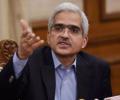
These are the highlights of RBI Governor Shaktikanta Das's statement and resolution of the Monetary Policy Committee (MPC):

Falling growth, inflation and lower fiscal deficit are expected to prompt RBI to cut rates.
The Reserve Bank of India has left the bank rate and repo rate unchanged at 6 per cent and 4.5 per cent, respectively.

As FY20 Budget fiscal measures need to be better understood, a reversal of the stance back to neutral will allow MPC flexibility to respond to incoming data.

RBI has pegged the GVA growth of 7.6 per cent for the current fiscal and 7.9 per cent the year after

Economists say RBI to raise policy rates in annual policy statement in April.

The banking sector in India is reeling under Rs 8 lakh crore of non performing assets (NPAs) or bad loans, of which PSU banks alone account for over Rs 6 lakh crore.

You must remain invested in bank deposits, unless you are considering the idea of earning higher returns by moving to gilt or liquid funds, says Adhil Shetty, CEO, BankBazaar.com.

Weakness in the rupee against the US dollar also weighed on domestic stocks. The local unit fell 11 paise to 70.60 against the US dollar intra-day.
Challenged by unrelenting inflationary pressures, Reserve Bank on Tuesday announced stringent measures of hiking mandatory cash reserve of the banks and its short-term lending rate to them to suck up an estimated Rs 20,000 crore (Rs 200 billion) -- a move that could make loans dearer for housing, car and personal expenses as also to the industry.

It's not necessary to use only external benchmarks, there are multiple avenues to meet the requirement that the RBI wants, the bank said.

Reserve Bank Governor D Subbarao will, however, not touch the policy rate or the repo, rate at which RBI lends to banks, on October 30 when he unveils the half-yearly monetary policy because headline inflation continues to be elevated at 7-7.5 per cent, the agency said.

Currently, banks follow system of internal benchmarks, including Prime Lending Rate, Benchmark Prime Lending Rate, Base rate and Marginal Cost of Funds based Lending Rate.

'Once bitten, twice shy, I didn't take up the challenge this time...' 'I realised I had failed to follow my karma because I feared failure.'

RBI is closely monitoring monsoon.
Nearly all the 43 economists surveyed over the past week expect the RBI to leave its key repo rate on hold at 8 per cent.

The NSE Nifty, after shuttling between 10,331.80 and 10,227.45, finally settled 196.75 points, or 1.94 points higher at 10,325.15.

In a tightening cycle, a premature pause in monetary policy action would be a costly policy error, Reserve Bank Governor Shaktikanta Das opined while voting along with five other members of the MPC for raising the key lending rate by 35 basis points earlier this month, according to the minutes of the meeting released on Wednesday. Prior to the December hike in repo rate, the RBI had raised the key short-term lending rate by 190 bps in four tranche.

Reversal in the declining economic growth trajectory is clearly the need of the hour and all steps should be taken to bring about this change.
RBI is committed to bringing down retail inflation to eight per cent by January 2015 and six per cent by January 2016.

The Reserve Bank of India (RBI) on Friday kept the key repo rate unchanged at 4 per cent in view of rising inflation and faint signs of economic growth amid the gradual lifting of coronavirus related countrywide lockdown.

Key lending rate (repo) raised by 50 basis points to 4.9 per cent; 2nd increase in 5 weeks

The Reserve Bank on Friday took steps towards normalisation of liquidity management to pre-pandemic levels, with the introduction of the standing deposit facility (SDF) as the basic tool to absorb excess liquidity, and narrowing the liquidity adjustment facility (LAF) to 0.50 per cent from the 0.90 per cent. Governor Shaktikanta Das said the SDF will be at 3.75 per cent, 0.25 per cent below the repo rate and 0.50 per cent lower than the marginal standing facility (MSF) which helps the banks with funds when required. The SDF has its origins in a 2018 amendment to the RBI Act and is an additional tool for absorbing liquidity without any collateral.
Reserve Bank of India chief Bimal Jalan said on Friday he was not considering a cut in the short-term repo rate, but added he was in favour of a soft monetary policy bias.\n\n\n\n

The repo rate or the short term lending rate was increased to 7.5 per cent from 7.25 per cent.

According to the global financial services major, the Consumer Price Index based inflation is peaking off and is expected to be around 7.5-8 per cent in September.

The unexpected interest rate hike by the RBI on Wednesday will have the banking system on average making a 10-15 bps gains on the yields, with private banks making larger gains as 57 per cent of their loans are linked to external benchmark rate and 40 per cent to the marginal cost of lending rates, as per a report. Stating that lenders and borrowers will face volatile times with the Reserve Bank raising the repo rate by 40 bps to 4.40 per cent and the cash reserve ratio (CRR) by 50 bps on May 4 in an off-cycle policy move, India Ratings said the market rates had already been moving higher before the move. The 364-day T-bills have moved up 120 bps and 10-year G-sec by 140 bps since May 2020, when the repo rate was cut to a record 4 per cent, which led to an expectation of a faster and sharper rise in interest rates in the system but the central bank stayed the course to support the fragile economy battered by the pandemic.
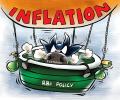
The Reserve Bank on Friday retained its inflation projection for current fiscal year at 6.7 per cent amid global geopolitical developments triggered by Russia-Ukraine war. RBI Governor Shaktikanta Das said the impact of inflation globally is weighing heavily on the domestic market. For September quarter of 2022-23, RBI projected retail inflation at 7.1 per cent.

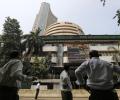
The broader 50-issue NSE Nifty too slipped from its record high, shedding 10.30 points or 0.09 per cent to end at 11,346.20.
RBI Governor D Subbarao aims to revive growth by increasing the flow of credit through reduction in policy rates. By reducing the repo rate by another 25 basis points, he is hinting at a further reduction in interest rates. And, through the 25 bps cut in reverse repo rate, he is trying to make it less remunerative for banks to park surplus liquidity with the central bank and instead prodding them to lend more to the productive sectors.

The fifth meeting of Monetary Policy Committee maintained the repo rate, at which it lends to the banks, at 6.25 per cent and the reverse repo, at which it borrows, will be 6 per cent.
From liquidity, monetary policy operations to financial inclusion, know about RBI monetary policy
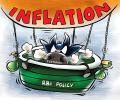
Amid a debate on the basis of a monetary policy stance, one may be curious enough to know how non-food retail inflation has behaved over the years in India. Let the eager souls catch a glimpse of facts. In the past 10 years, non-food inflation came down below 4 per cent on two occasions - pre-Covid period of 2019-20 and now in the first four months of the current financial year (FY25).
Repo rate is 9 per cent and Reverse Repo as well as Bank rate stand at 6 per cent. RBI cut CRR, the amount of cash banks need to keep with the central bank, by 1.5 per cent in two tranches last week releasing Rs 60,000 crore (Rs 600 billion) into the cash-starved banking system.

Despite inflation easing, experts see RBI maintaining status quo on Dec 2

In the last policy review in December, RBI had decided to keep policy rate unchanged.
